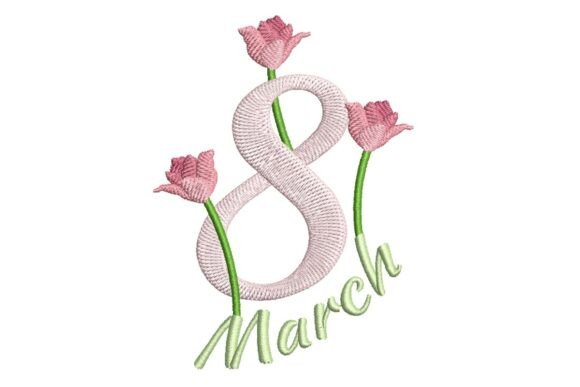
March 8 Flowers: A Designer’s Stitch-Out Review
As an embroidery professional who has digitized and stitched out countless holiday designs, I approach seasonal files with a critical eye. When evaluating March 8 Flowers, my primary concern is not just the aesthetic appeal of the blooming tulips or the elegant typography, but how this machine embroidery design translates from screen to fabric. For fellow Etsy sellers, small shop owners, and makers preparing for International Women’s Day, the difference between a beautiful digital preview and a sellable finished product lies in the technical execution. This review breaks down the practical realities of using this design in a commercial or high-end personal setting.
First Impressions and Visual Hierarchy
Upon opening the embroidery file, the layout of March 8 Flowers immediately suggests a balanced composition. The integration of the date with the floral elements avoids the common pitfall of looking like two separate clip-art images forced together. Instead, the tulips appear to cradle or frame the text, creating a unified badge-like quality. This is crucial for custom apparel and embroidered patches where visual cohesion determines perceived value.
The mood is distinctly celebratory yet refined. Unlike generic holiday embroidery that can sometimes feel cartoonish, this design leans into elegance. For a craft business targeting adult demographics—such as boutique clothing brands or personalized gift shops—this sophistication matters. The stitch pathing appears optimized to minimize jumps, which is a significant time-saver during production runs. However, as with any digital embroidery file, I always recommend verifying the stitch order in your specific machine software before committing to a bulk run.
Real-World Application: The Tote Bag Test
To truly evaluate March 8 Flowers, I mentally placed it in a real-life production scenario: creating premium canvas tote bags for a Women’s Day market stall. Tote bags are a staple handmade product, but they present unique challenges due to fabric texture and weight.
In this context, the design’s density becomes the deciding factor. If the tulips utilize heavy fill stitch areas without adequate underlay, the canvas could pucker, distorting the "8" and making the lettering illegible. Conversely, if the satin stitch borders on the petals are too narrow, they might get lost in the weave of a textured natural fiber. For this specific project, I would pair March 8 Flowers with a medium-weight cutaway stabilizer rather than tear-away to maintain structural integrity. The goal is a flat, professional finish that signals quality to the buyer. If you are an Etsy seller listing these bags, photographing the actual stitch-out on the textured fabric is far more effective than relying solely on a printable mockup, as customers need to see how the thread interacts with the material.
Apparel Considerations for Sweatshirts and Tees
Moving from accessories to custom apparel, the variables change. Sweatshirt embroidery requires managing stretch and pile. March 8 Flowers seems versatile enough for left-chest placement or centered back prints, but caution is necessary. On fleece or French terry, the delicate details of the tulip stems risk sinking into the fabric nap. Using a water-soluble topping is non-negotiable here to keep the running stitch details crisp and visible.
For lighter t-shirts, the concern shifts to stabilization and drape. A dense holiday embroidery design can make a lightweight jersey hang awkwardly. Before stitching this onto a delicate knit, check the total stitch count and density settings. If the design feels too rigid in the hoop during testing, it will likely be uncomfortable to wear. In such cases, this file might be better suited for structured garments like denim jackets or aprons rather than flowy summer tops.
Navigating Technical Limitations and Fabric Choices
No single machine embroidery design works universally. Through experience, I have identified specific scenarios where March 8 Flowers requires careful handling or potential modification:
- Small Hoop Sizes: Resizing this design down to fit a 4x4 hoop may compromise the legibility of the date or the definition of the tulip petals. Always test the smallest intended size; if the satin stitches become thinner than 0.8mm, the risk of thread breaks increases significantly.
- Dark Fabrics: Elegant designs often rely on subtle shading. On black or navy fabric, ensure the thread colors provide sufficient contrast. You may need to add a white underlay or adjust the color palette so the flowers do not disappear against the background.
- Curved Surfaces: While excellent for flat items, placing this design on caps requires verification. The vertical span of the "8" and flowers must fit within the cap’s sewable area without hitting the brim seam or crown curve.
- Frequent Washing: For baby embroidery or kitchen towels, durability is key. Ensure all decorative accents are securely anchored. Running stitches used for veining should have adequate tie-offs to prevent unraveling after repeated laundering.
Commercial Value and Brand Consistency
For creative entrepreneurs and digital product sellers, March 8 Flowers represents more than just a seasonal graphic; it is a business asset. The design’s elegance lends itself well to higher price points compared to standard novelty embroidery. When used consistently across a product line—matching tea towels, pillow covers, and apparel—it builds brand recognition and trust.
However, professionalism extends beyond the stitch-out. Before selling finished products or offering this as part of a commercial embroidery package, strictly verify the licensing terms included with the file. Confirm whether you have rights for physical product sales, digital redistribution, or both. Clear licensing protects your small shop product listings from takedowns and ensures ethical business practices. Additionally, when creating marketing materials, use accurate photos of the stitched design alongside your digital previews. Customers appreciate transparency regarding how the embroidery file actually renders on different fabric textures.
Essential Pre-Stitch Checklist for Makers
To ensure success with March 8 Flowers, treat every new fabric combination as a unique variable. My standard protocol includes:
- Stabilizer Matching: Never guess. Match the stabilizer weight to both the fabric and the design density. Test on scrap fabric identical to your final project.
- Contrast Verification: View the design in grayscale or black and white during the planning phase to ensure tonal separation exists independent of color.
- Hoop Size Confirmation: Verify the design dimensions fit your hoop with adequate clearance for the presser foot and clamps.
- Detail Inspection: Zoom in on the digital file to check for overlapping stitches or gaps that might cause registration issues during sewing.
- Wash Testing: For items marketed as durable goods, wash and dry the test swatch to check for shrinkage or thread distortion before full production.
Ultimately, March 8 Flowers offers a strong foundation for Women’s Day projects, provided it is applied with technical mindfulness. Whether you are crafting a heartfelt personalized gift or scaling up production for a holiday rush, respecting the relationship between the digitizing, the materials, and the machine will yield results that honor both the occasion and your craftsmanship. Always consult the specific file documentation for exact specifications, and let your test stitches guide your final production decisions.