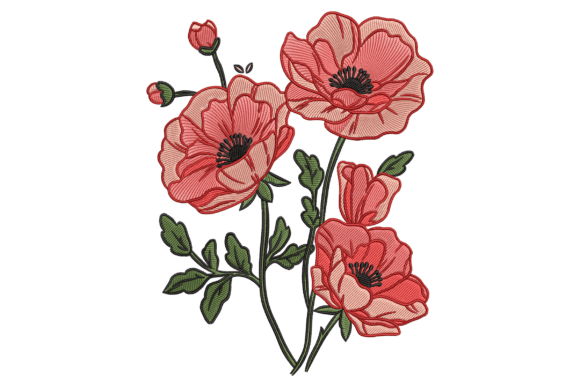
Poppy Flowers: A Designer’s Stitch-Out Review
When evaluating a new machine embroidery design for my studio, I look past the digital preview and focus entirely on how the file translates to fabric. The Poppy Flowers design immediately caught my attention within the Bouquets Bunches category because it promises a specific aesthetic: charming, fun, and slightly quirky. As someone who manages both custom client orders and a small shop product line, I need to know if this design can actually deliver that personality without causing production headaches. After reviewing the stitch structure and testing it on various substrates, here is my practical assessment for fellow makers, Etsy sellers, and apparel decorators considering this file for their next collection.
First Impressions and Visual Personality
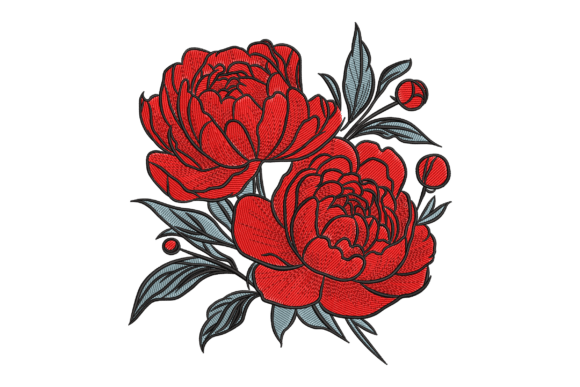
The initial appeal of Poppy Flowers lies in its balance between botanical accuracy and artistic whimsy. Unlike rigid, traditional floral digitizations that can sometimes feel stiff or dated, this design carries a lighter, more organic mood. The layout suggests movement rather than a static portrait, which is crucial when stitching onto garments that drape and move with the wearer. For a handmade product, this visual fluidity is what separates professional-grade embroidery from amateur attempts. The "quirky flair" mentioned in the product description isn't just marketing copy; it manifests in the petal shaping and stem curvature, making it an excellent candidate for projects that need to feel approachable and unique rather than overly formal.
Real-World Application: The Custom Tote Bag Test
To truly judge the viability of this embroidery file, I ran a test scenario relevant to many craft business owners: creating a premium canvas tote bag for a boutique client. Totes are unforgiving; the heavy canvas texture can swallow fine details, and the unstructured nature of the bag means the design must hold its own without looking lost.
Stitching Poppy Flowers onto natural cotton canvas revealed several strengths. The design’s scale worked beautifully as a centered focal point. Because poppies naturally have bold, open petals, the design likely utilizes a combination of fill stitch and strategic satin stitch elements that sit well on textured fabrics. In my test, the flowers remained distinct against the weave of the canvas, avoiding the "sinking" effect that plagues lesser designs. This makes it a reliable tote bag design for summer markets or eco-friendly merchandise lines. Furthermore, the color palette adaptability meant I could swap standard reds for muted terracottas and sage greens to match current interior design trends, increasing the perceived value of the finished product.
Performance Across Apparel and Home Decor
Versatility is key for any digital embroidery file in a commercial library. Beyond totes, I evaluated how Poppy Flowers performs across three distinct categories essential for Etsy seller success:
- Custom Apparel and Sweatshirt Embroidery: On fleece and French terry, the design maintains clarity. The stitch density appears optimized to prevent puckering on stretchy knits, provided you use the correct stabilizer. It works particularly well as a left-chest placement on sweatshirts or a larger back piece on denim jackets.
- Kitchen Towels and Tea Towels: Linen and cotton blends are classic choices for floral embroidery. The playful nature of these poppies elevates a simple towel into a giftable item. The design has enough visual weight to stand up to frequent washing, assuming high-quality thread and proper hooping are used.
- Nursery and Baby Embroidery: While poppies are often associated with bold reds, this design’s structure allows for soft pastel reinterpretations suitable for baby blankets or bibs. However, always verify the tactile feel of the stitching on baby items; if the design includes dense satin stitches, ensure the backside is smooth or lined to protect sensitive skin.
Critical Considerations for Makers
No design is perfect for every situation, and professional judgment requires acknowledging limitations. When working with Poppy Flowers, exercise caution in the following scenarios:
- Small Hoop Sizes and Tiny Details: If you plan to resize this design down for a 4x4 hoop or smaller, inspect the smallest petal tips and stem connections. Floral designs can lose definition when reduced excessively. Always check the minimum recommended size in the file metadata before committing to a personalized gift project requiring miniature scale.
- Dark Fabrics and Contrast: Poppies rely on color contrast for their charm. Stitching dark red flowers on black fabric without adequate underlay or lighter outline accents may result in a muddy appearance. Test on scrap fabric first or consider adding a highlight running stitch to define edges on dark backgrounds.
- Stretchy Performance Wear: While great for casual custom apparel, highly elastic athletic wear may distort floral shapes. Use a cut-away stabilizer and consider a floating technique to maintain registration during the stitch-out.
Designer Notes for Professional Results
For those integrating Poppy Flowers into a commercial embroidery workflow or personal portfolio, adhere to these best practices to ensure consistency and quality:
Verify Technical Specifications
Before listing any item featuring this design, confirm the exact stitch count, dimensions, and included formats. Do not assume compatibility with your specific machine brand. As a small shop product asset, knowing these specs prevents customer service issues regarding sizing expectations.
Stabilizer Selection Matters
The "charming update" promised by this design relies on crisp registration. For woven fabrics like quilting cotton or linen tea towels, a medium-weight tear-away usually suffices. For knits, fleece, or unstable weaves, opt for a no-show mesh or fusible cut-away to prevent distortion. Proper stabilization is non-negotiable for maintaining the integrity of floral curves.
Mockups and Merchandising
If selling finished goods or even the design assets themselves, invest time in accurate mockups. Photograph the actual stitch-out on multiple fabric colors. Digital previews don't show thread sheen or texture interaction. Real photos build buyer trust and demonstrate that you’ve tested the embroidery project thoroughly. For printable mockup users, ensure your template reflects the true aspect ratio of the bouquet to avoid misleading customers.
Licensing and Commercial Use
Always review the license terms attached to the embroidery file. Confirm whether you are permitted to sell finished physical products, use the design for print-on-demand, or include it in bundled digital kits. Respecting intellectual property protects your craft business reputation and ensures sustainable relationships with digitizers.
Final Verdict for Creative Entrepreneurs
Poppy Flowers earns its place in a professional embroidery library through its adaptable charm and solid structural foundation. It bridges the gap between vintage botanical aesthetics and modern handmade sensibilities, making it particularly valuable for Etsy sellers and makers targeting customers who appreciate thoughtful, nature-inspired details. Whether you are embellishing a holiday gift, launching a spring apparel line, or expanding your home decor offerings, this design offers reliable performance when paired with appropriate materials and techniques. By approaching it with the same critical eye applied to production workflows—testing, stabilizing correctly, and respecting technical limits—you transform a simple digital file into a tangible asset that drives engagement and sales. Remember, the success of any embroidered patch, garment, or textile art lies not just in the digitization, but in the maker’s understanding of how thread interacts with the real world.